“The learned lives, although he dies.”    – Imam Ali ibn Abu Talib (a.s.)

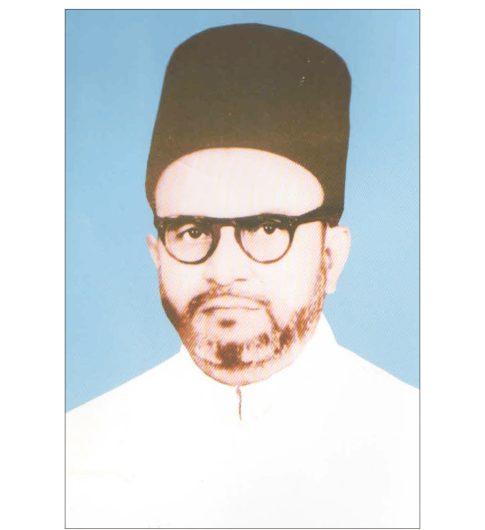
Sir Sajjadi Vafakhani Mir Ahmed Ali Sahib

(1902 – 1976)
Founder, The Husainy Trust

Sir Sajjadi Vafakhani Mir Ahmed Ali Sahib was a distinguished Islamic scholar, educationist, author, and social reformer whose life was devoted to knowledge, interfaith understanding, and the upliftment of the underprivileged.

Born in Madras in 1902, he combined deep religious scholarship with formal academic excellence, mastering Arabic, Persian, English, and German, and earning advanced qualifications in education and psychology. His intellectual breadth enabled him to engage meaningfully across faiths, cultures, and academic traditions.

In 1943, moved by the condition of orphaned and destitute children, he founded Madarasa-e-Husainy and Yateemkhana, which later evolved into The Husainy Trust. What began as an act of compassion grew into a lifelong mission to create institutions that offered not charity alone, but dignity, discipline, education, and opportunity.

After taking voluntary retirement from government service, he dedicated himself entirely to social service—travelling widely, mobilising support, and building schools, residential care facilities, and vocational training institutes at what is now known as Husainabad.

A prolific writer and thinker, he is best known for his English translation and commentary of the Holy Qur’an, as well as several scholarly works on Islamic history and philosophy. His writings continue to be studied and respected internationally.

The institutions he founded, and the thousands of lives shaped by his vision, stand today as a living testament to his belief that education, compassion, and service to humanity are inseparable.

Founder's Legacy

A Life Dedicated to Knowledge, Faith, and Service

Sir Sajjadi Vafakhani Mir Ahmed Ali Sahib was born on 15 July 1902 in Madras, into a family of distinguished lineage tracing its ancestry to the Fourth Holy Imam, Ali ibn al-Husayn Zayn al-‘Abidin (a.s.). The family, known as Sajjadi Vafakhani, had migrated from Hejaz through Iran and settled in India, earning recognition for loyalty, scholarship, and public service.

Early Education and Intellectual Formation

He completed the recital of the Holy Qur’an at the age of nine under the guidance of his maternal uncle, Janab Mir Jaffer Hussain (‘Peer’). He later pursued English education at Harris High School, Madras, where he undertook extensive study of the Holy Bible—earning the Bible Prize and scholarship repeatedly. These formative years laid the foundation for his lifelong commitment to interfaith understanding and scholarly dialogue.

Academic and Professional Achievements

Sir Mir Ahmed Ali Sahib pursued higher studies in Arabic and Persian, earning an M.A., Bachelor of Oriental Languages (B.O.L.), B.T., and later an M.Ed. with Psychology as his specialisation under the guidance of Dr. G.D. Boaz of Madras University. He also obtained higher proficiency diplomas in Arabic and Persian and completed a diploma course in German.
He served as Assistant Professor at the Government Muhammadan College (later Government Arts College, Madras), where he was widely respected as a teacher, scholar, and mentor.

Publications and Intellectual Contribution

During his academic career, he co-founded the monthly journal “The Peace Maker”, which gained international readership and became a platform for scholarly discourse on religious philosophy. The journal notably responded to misrepresentations of Islam in Western theological writing, earning both acclaim and controversy.

His most enduring scholarly contribution is his translation of the Holy Qur’an titled:
“The Holy Qur’an: English Translation and Commentary According to the Version of the Holy Ahlul-Bait” (first published in 1964), accompanied by philosophical notes by Ayatullah Agha Haji Mirza Mahdi Pooya Yazdi Sahib.

He also authored several respected works, including:

  • Husain, The Saviour of Islam
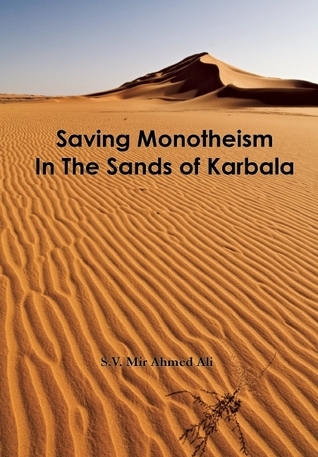
  • Saving Monotheism in the Sands of Karbala
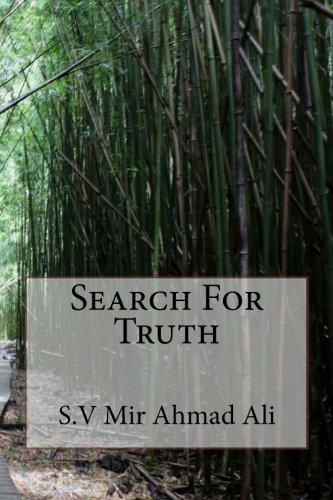
  • Search for Truth
  • Imam Hussain – The Redeemer of Islam
  • Biography of Imam Hussain ibn Ali

Institution Builder

The establishment of Madarasa-e-Husainy and Yateemkhana in 1943 marked the beginning of a sustained effort to provide structured education and welfare for children. Over time, this initiative evolved into what is now The Husainy Trust, with educational and residential institutions that continue to function decades after his passing.
The campus at Husainabad stands as a tangible outcome of this long-term vision—representing stability, continuity, and disciplined care.
He served as President of The Husainy Trust until his demise on 17 September 1976.

A Living Legacy

The true measure of Sir Sajjadi Vafakhani Mir Ahmed Ali Sahib’s legacy lies not in books or buildings, but in the thousands of lives educated, sheltered, and guided through the institutions he founded.
The Husainy Trust continues to carry forward his vision—service without discrimination, education with values, and compassion in action.

Publications and Intellectual Contribution

During his academic career, he co-founded the monthly journal “The Peace Maker”, which gained international readership and became a platform for scholarly discourse on religious philosophy. The journal notably responded to misrepresentations of Islam in Western theological writing, earning both acclaim and controversy.

His most enduring scholarly contribution is his translation of the Holy Qur’an titled:
“The Holy Qur’an: English Translation and Commentary According to the Version of the Holy Ahlul-Bait” (first published in 1964), accompanied by philosophical notes by Ayatullah Agha Haji Mirza Mahdi Pooya Yazdi Sahib.

He also authored several respected works, including:

➤ Husain, The Saviour of Islam

➤ Saving Monotheism in the Sands of Karbala

➤ Search for Truth

➤ Imam Hussain – The Redeemer of Islam

➤ Biography of Imam Hussain ibn Ali

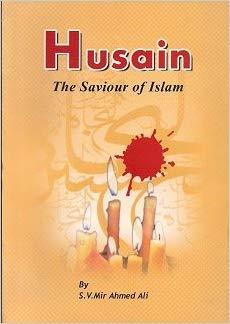
Husain The Saviour of Islam

The book presents the lifetime of Imam Husayn (AS) from birth to martyrdom, and concentrates his life with his mother; the mistress of the world's women, and his father and brother, and his role in wars and the rest affairs 

Read

Saving Monotheism in the Sands of Karbala

Less than 50 years after the death of Islam’s last prophet, Muhammad, an epic battle forever altered the course of Islam. Muhammad’s grandson Hussain was martyred in the sands of Karbala on what is now a holy pilgrimage site. 

Read

Search For Truth

This book is one of the many Islamic publications distributed by Talee throughout the world in different languages with the aim of conveying the message of Islam to the people of the world.

Read

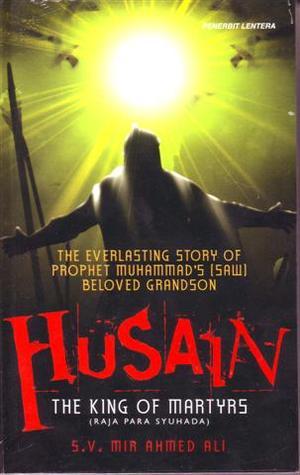
Hussain The King of Martyrs

Buku ini bercerita ttg jalan hidup Husain (as), cucu Rosululloh, raja para syuhada, yg rela mengorbankan seluruh jiwa raganya di Jalan Allah, menentang tiran, Yazid dan pasukannya. Bagi pencinta Rosul dan ahlul bayt-nya yg mulia, kisah dalam buku ini pasti akan membuat air mata menetes.
Read

Imam Hussein the Redeemer of Islam

A series of letters debating Shi'i and Sunni beliefs between the late Shi'i scholar Sharaf al-Din, and the late Sunni scholar and head of Al-Azhar university of that time, Al-Shaykh Salim al-Bishri al-Maliki. The written form of the debates in book, has the advantage that the two parties had the opportunity to provide the best possible replies they could give.
Read

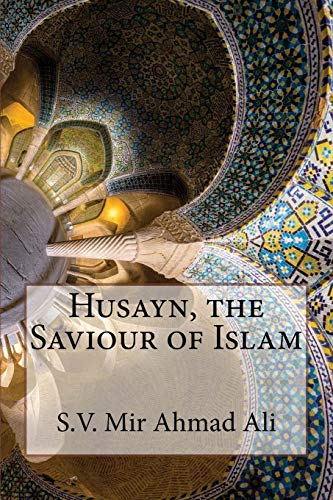
Husayn, the Saviour of Islam

The book presents the lifetime of Imam Husayn (as) from birth to martyrdom, and concentrates his life with his mother; the mistress of the world's women, and his father and brother, and his role in wars and the rest affairs before his imamate, and a precise exposition of Karbala occurrences.

Read